How to Organise Your Pantry
This post contains affiliate links. If you purchase through these links, I may earn a small commission at no extra cost to you.
If when you open your pantry you begin to feel overwhelmed, you dread opening it, or you can’t find anything in it, you are not alone. When your pantry is cluttered and messy it doesn’t just look bad but it wastes your time, money and energy. When food is hard to see, things expire, duplicates get bought and cooking suddenly feels more stressful than it should. But today we’re going to fix that. The goal is not a Pinterest perfect pantry, it’s creating a system that makes food easy to find and put away with systems that will actually stay long term.
The system I use for organising every space in my home is the IVORY Method. Instead of focusing on making things look tidy for a moment, it creates systems that lasts.
It stands for:
Inventory – see exactly what you own
Visualise – design the space before organising
Organise – create clear zones and structure
Reset – build simple habits so it never gets chaotic again
You proof – make the system realistic for your habits
Once you understand these five steps, you can use them to organise almost anything.
Summary
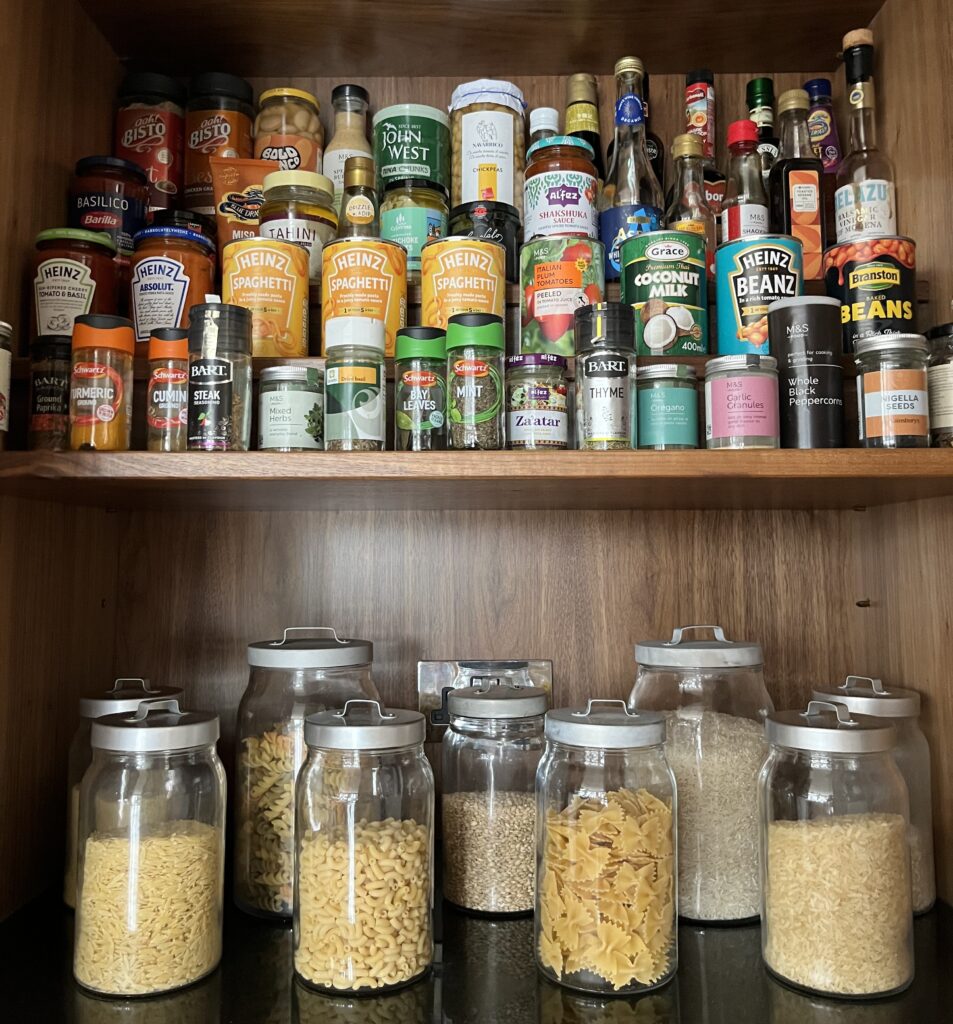
If you want to organise your pantry quickly and don’t want to read the whole post, these are the core items that make the biggest difference.
Plastic food storage containers
Clear pantry bins for snacks
Pantry labels keep it maintainable
If you start with these four things, you can organise the majority of pantries.
Inventory
Before buying all the containers and storage, the most important step is actually seeing what you have. So start with taking everything out of your pantry including all the things you may have already put in place to organise it.
Then group food into simple categories that work for you. These could be: Snacks, Pasta and grains, Canned foods, Baking ingredients etc.
You will probably discover items you forgot about and gone off, duplicates and things that should not be in your pantry. Be ruthless because the fewer items you keep, the easier the system will be to maintain.
Visualise
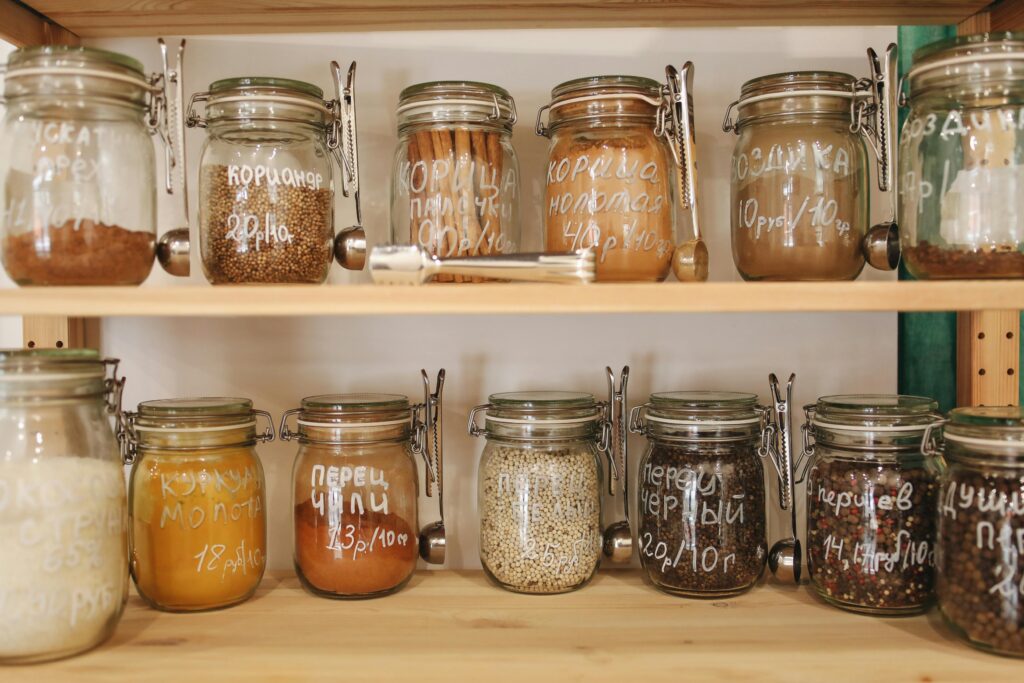
Before putting things into organisers, think about how you use your pantry and what matters most to you. Maybe you want it to be organised by meals, colours or healthy and unhealthy. It should be designed around what you want for the space and how you use it day to day.
Think about: What foods you reach for every day, whether children need easy access to snacks, how deep the shelves are and what ingredients you use most often.
You should also plan zones within your area. For example I like to do it based on meals and then within that organise in colour. So if the snack I want has red packaging I know exactly where to find it and it looks visually appealing. Planning your zones first stops you from constantly reorganising later.
Organise
Now that you know what you have and how your pantry should function, this is where the real transformation happens. Most people try to organise everything at once and feel overwhelmed. In reality, a few high impact changes make the biggest difference.
Clear Airtight Containers
The biggest improvement most people see comes from removing bulky food packaging and transferring ingredients into containers. Original packaging wastes space and makes it difficult to see how much food is left. Whereas containers keep ingredients fresh and make them easier to stack and store.
Plastic containers are lightweight and affordable but may stain over time.
Glass containers last longer and do not absorb smells but are heavier and more expensive.
Stackable cereal containers work well for tall ingredients such as oats or cereal.
Skroam 36 Food Storage Containers
These are really good as you receive 36 containers for around 30 pounds. They are stackable and come in 6 different sizes so you can store whatever you need; and they come with labels and a pen. However they may stain over time as they are plastic.
ComSaf Glass Jars with Lids
These are stable, durable and airtight. They are easy to clean and look really aesthetic! They come in multiple pack sizes and container sizes so the price depends on what you get however they are defiantly more expensive than the plastic ones and will be heavier.
KICHLY Dry Food Storage Container
Comes in a packs of 3, 4, 6, 12, 16 and 24. Most are at around £3 per container and they are quite large. They are really useful as they can be used for anything from cereal to dog food. They have an easy system for dispensing however some reviews say they crack easily.
Shelf Risers
Most pantry shelves waste vertical space so shelf risers are really good as they allow you to stack items while still seeing everything clearly. They work well for Jars, Cans and spices and they effectively double the surface area of the shelf. However, you need enough shelf height to do this.
SONGMICS Storage Shelves Cupboard Organisers
These are really good as they come in a pack of 2, come in multiple colours and are quite good value at around £20 for both. One of them is slightly smaller than the other so can slide one under the other. However they may not be tall enough for what you want them for.
Pantry Bins and Baskets
Bins are one of my favourite things to put in a pantry as they are what create the zones. This is because they stop loose items spreading across shelves and you can see whay you’ve got. They are especially useful for Snacks.
Plastic Storage Baskets with lids
These are really nice as they hide all the content and are stackable. They also have lids to keep everything tidy. However, they are quite small especially for the price of £25 for 6.
Vtopmart Clear Plastic Storage Bins
These come in lots of different pack sizes and work really well because you can see exactly what is inside them; so you are able to quickly access whatever you need. However, this means that they may not look as nice as everything is on display.
Cotton Rectangular Rope Storage Basket
These come in multiple colours so they can fit the aesthetics you are going for and hey look a lot neater than the plastic storage bind. However they are slightly more expensive at around £30 for 3 and they will hide the stuff so you can’t easily access it.
Lazy Susan
Deep shelves often become black holes where food disappears and a Lazy Susan allows items to spin forward instead of reaching into the back.They work really well for sauces, jars and oils.
2 Lazy Susans
This one is really good as it comes in a pack of 2, has a non slip base and is really good value for money as two 30cm ones are around £17. You can also get 2 25cm for around £15.
2 tier Lazy Susan
This one is really good if you don’t have much surface space as it has two levels. It is slightly cheaper at around £32 but you can extend how high up you want the second level to be.
Labels
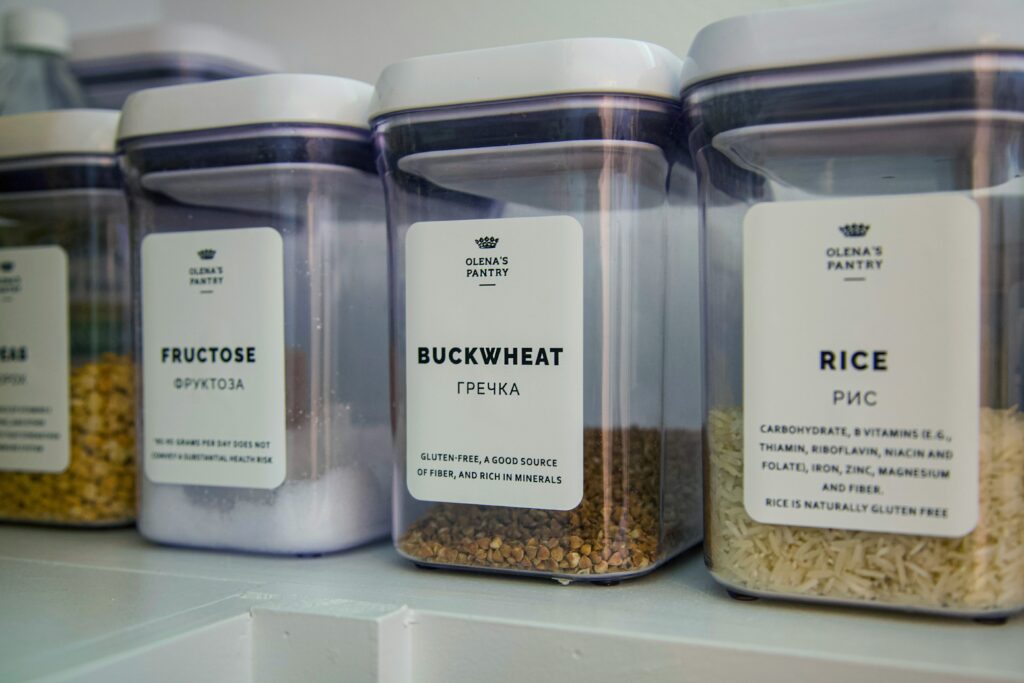
Labels are what keep a pantry organised long term and without them, people forget where items belong and the system slowly breaks down. Labels make it easy for everyone in the house to return items to the correct place especially if you live with people who don’t seem to know what organisation means. Common options include label makers, printed pantry labels and chalk labels.
Bluetooth Label Maker Machine
This option is really good if you want custom labels for example instead of snacks you may want the specific type. This can also be used for other aspects of the house; however it is more expensive at £40.
432 Labels for Pantry
These are really good as they look aesthetically pleasing, they’re easy to use and you’ll have them forever. But, if you want something specific they won’t have it and they wont work on the rope baskets.
20 Pcs Basket Labels
These work best on Baskets as they are clip on and they are customisable as you can write whatever you want. However they are not suitable for bottles and you have to have nice handwriting.
Other Pantry Storage That May Help
Here are just a few more things that can really help when organising your pantry.
Can Dispenser Set of 4
This is really helpful if you have a lot of cans stocked up and you want to organise them neatly. They are priced at around £15 for 4.
Double Decker Bread Box
This is so good as it stores all your bread in one place, has a cutting board and comes in 3 different colours. The design also includes windows so you can actually see what you own. Their really helpful but also quite expensive at around £50.
3-Tier Extendable Spice Rack
This spice rack has three shelves and is also expandable to fit into any space you have. It keeps everything visible so you can see what you have and comes in either a black or a white colour. However it is more expensive at around £33.
Reset
Once the system is set up, simple habits keep it working.
Once a week do a quick pantry reset where you check expiry dates, return items to their bins, wipe shelves and move older food to the front. Do this before meal planning and writing your weekly shopping list; this prevents clutter from slowly building up again.
You-Proof
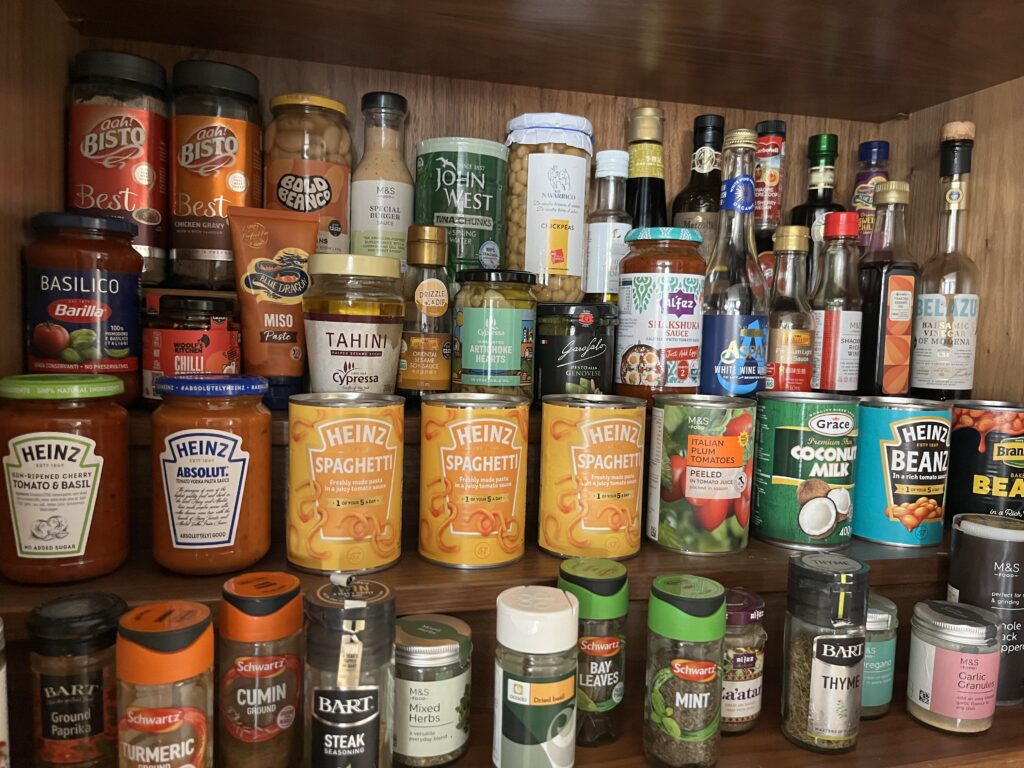
The final step is making sure the system actually works for your lifestyle so come back after a few weeks and ask yourself what’s working and what is not. Then rework it a bit so that it fits for you. You should design it around you and the people you live withs habits, if the system only works when you feel motivated it won’t last.
Once your pantry is structured properly, everything becomes easier. You waste less food, stop buying duplicates and food shopping becomes so much easier. Over time, these small systems save both time, money and stress.