How to Organise Under Your Sink
(And the 10 Best Organisers for it)
This post contains affiliate links. If you purchase through these links, I may earn a small commission at no extra cost to you.
Under-sink cupboards are one of the easiest places in your home for clutter to build up. Most people start by putting in some cleaning products when they first move in as it seems like a logical spot but overtime more bottles appear, a multipack of sponges are thrown in and dishwater tablets are hanging around at the back. Eventually it becomes extremely crowded and items leak, fall over and get buried behind each other.
This isn’t your fault, under-sink cabinets are awkward by design. Pipes cut through, the cabinet is usually tiny and the cleaning bottles are massive. So, without a system, the space quickly becomes chaotic.
However, when this cupboard is organised properly it becomes one of the most useful areas in the house; and when you can quickly reach the products you need, cleaning becomes faster and much less frustrating.
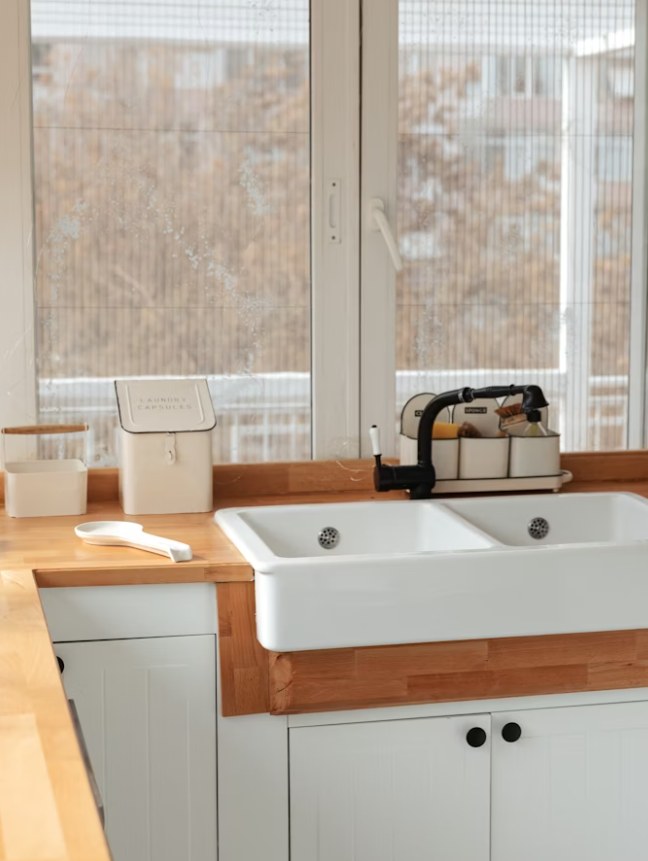
To organise spaces like this, I use a simple system called the IVORY Method.
Instead of focusing only on making things look tidy, the IVORY Method creates systems that actually stay organised long term.
The IVORY Method stands for:
Inventory – see exactly what you own
Visualise – design the space before organising
Organise – create clear zones and structure
Reset – build simple habits so it never gets messy again
You-proof – make the system realistic for your habits
This guide will walk through each step so you can organise the space under your sink in a way that works long term.

Inventory
Before you do anything, take everything out. You will see what your working with and can start to group by categories. You will find that you have duplicates of products, rubbish or 20 sponges. The categories that you choose depend on what you have but I usually do every day, dishwasher, backup etc.
As you sort through remove anything that no longer needs to be there. Throw away empty bottles, dried-up sponges, and products you never use. If you have three half-used versions of the same cleaner just put them into one bottle. Only keep things you need and use.
Visualise
Under-sink cabinets are awkward because of the plumbing pipes running through them. Instead of trying to ignore this obstacle, design the storage around the pipes.
Look inside the empty cupboard and think about how the space could work best. Some common layout strategies include: Front area for everyday items, Back area for backup supplies, Dedicated area for cloths and sponges, Leave a little empty space, or whatever works best for you.
Once you have a rough idea of where categories might go, the next step is choosing organisers that make the system work.
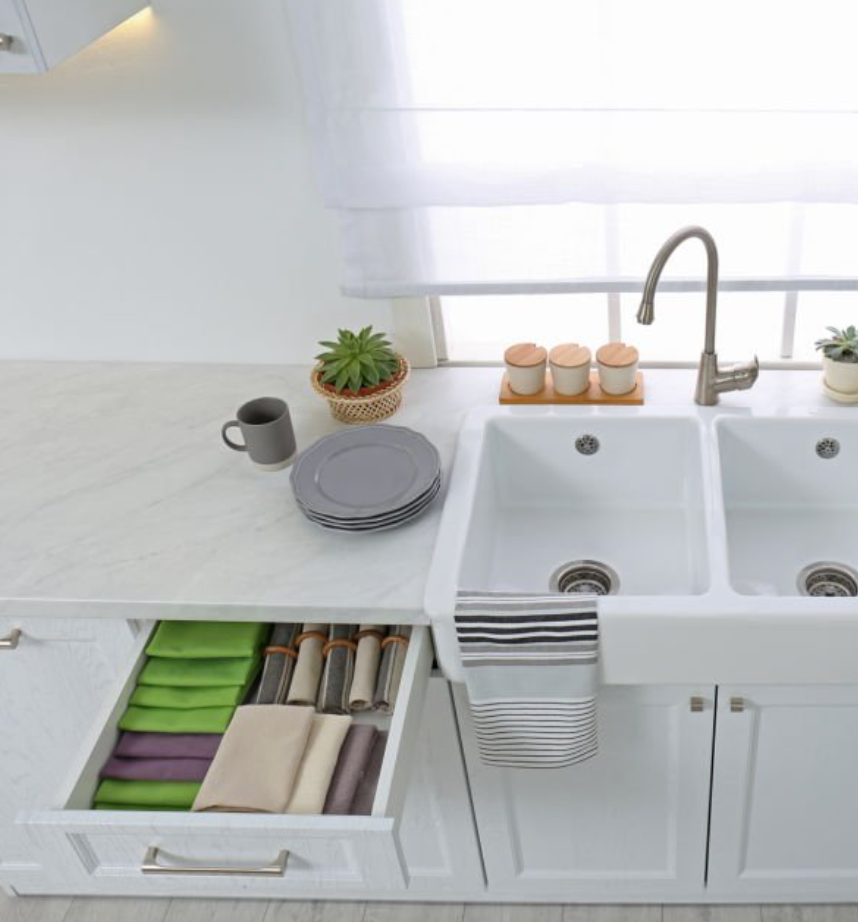
Organise – The 10 Best Under-Sink Organisers
This is the step where the biggest improvements happen as a few smart storage solutions can completely change the usability of the space. Below are ten organisers that work particularly well under sinks.
2 Tier Extendable Sink Shelf Rack
A 2 tier extendable sink shelf rack allows you to have 2 levels of storage for any width of cabinet. It is best for smaller items or laying bottles flat. It comes in white to fit in with any kitchen and is only around £15 pounds.
Pros – Creates two layers of storage, adjustable width between 50 and 70cm, makes the space feel structured
Cons – Takes a bit of time to set up, not ideal for very tall bottles
Two-Tier Pull-Out Under-Sink Drawers
Deep cabinets often make it difficult to reach items stored at the back. Pull-out drawers solve this problem by allowing the entire organiser to slide forward. These are particularly helpful for storing cleaning sprays and bottles.
Pros – Easy access to items at the back, prevents pro ducts from falling over, makes the space feel more structured and comes in an adjustable height.
Cons – Slightly more expensive than basic organisers, requires enough cabinet width to slide
Clear Storage Bins for Grouping
Clear storage bins are one of the simplest but most effective organisers. Instead of bottles being scattered throughout the cupboard, bins allow you to group items into categories.
Pros – Easy to see what’s inside, keeps categories separate, come in lots of different pack sizes
Cons – Does not add vertical storage, needs labels if categories change often and they may not look as nice as everything is on display.
Lazy Susans for Deep Corners
Lazy Susans are rotating trays that make it easier to access items stored in deep cabinets. They work especially well for small bottles and cleaning products.
Pros – Easy access to items at the back, reduces clutter in deep cupboards, simple to use, comes in a pack of 2, has a non slip base, good value for money and comes in different sizes
Cons – Not ideal for very tall bottles, you may not have room and requires a flat cabinet base
Cleaning Caddies
If you clean regularly, it can be frustrating to gather products from different places around the house.
A cleaning caddy solves this by storing your most frequently used supplies in one portable container.
Pros – Makes cleaning faster, keeps everyday supplies together, easy to carry around the house and comes in multiple colours and sizes.
Cons – Takes up cabinet space, may not hold larger bottles, not great value for money at around £22.
Shelf Liners to Protect Cabinets
Under-sink cabinets are one of the most common places for small leaks to occur as cleaning products can drip and leave sticky residue.
Shelf liners sit at the base of the cupboard and protects the cabinet to long term damage.
Pros – Protects cabinet from water damage, easy to wipe clean, very affordable, adds a protective layer, can be cut to be any size and adds anti slip features.
Cons – Does not increase storage, needs occasional cleaning.
Adhesive Kitchen Roll Holder
Kitchen roll usually ends up shoved somewhere awkward or taking up shelf space. An adhesive kitchen roll holder allows you to attach it to the inside of the cabinet door or wall, freeing up valuable storage space and making it much easier to grab quickly when cleaning spills.
Pros – Uses vertical space, frees up shelf space, very easy to install
Cons – Adhesive may weaken over time
Over-Cabinet Door Organisers
The inside of cabinet doors is often unused space. Stick on organisers add extra storage for small items such as cloths, sponges, or cleaning sprays. This keeps frequently used items easy to reach.
Pros – Uses otherwise wasted space, keeps small items accessible, simple installation and comes in both clear and white colour.
Cons Limited weight capacity and not suitable for large or heavy bottles
Tension Rods for Hanging Spray Bottles
This is one of the most clever under-sink storage tricks. A simple tension rod installed across the cabinet allows spray bottles to hang by their trigger handles, this keeps them upright and frees up shelf space underneath.
Pros – Very inexpensive solution, frees up cabinet space, keeps bottles upright and comes in multiple sizes and colours.
Cons – Works best with spray bottles only, requires correct cabinet width and must be thin enough for spray bottles to fit on as they may fall off.
Over The Door Hooks for cloths, gloves and Brushes
Small items like cloths, gloves, and brushes often end up thrown into the cupboard, which makes everything feel messy again. Over the door hooks give these items a clear place to live without taking up any shelf space. Priced at around 17 pounds.
Pros – Uses otherwise wasted space, keeps small items accessible, no installation required, comes in 5 colours
Cons – limited weight capacity, looks odd from the back if not a matching colour.
The Most Useful Under-Sink Organisers
In my opinion these are the organisers that make the most difference if your struggling to pick a couple of things to try.
Expandable under-sink shelf organisers
Great for creating extra shelving around pipes.
Clear storage bins
Useful for grouping cleaning products together.
Pull-out drawer organisers
Make it much easier to reach items at the back of the cabinet.
Cleaning caddies
Perfect for carrying everyday products around the house.
Reset
Once the cupboard is organised the only thing left to do is keep it that way. The key is building a few habits to come back to every time.
For example you could:
Do a quick weekly reset – Take two minutes to check that items are still in their zones.
Wipe spills immediately – Cleaning products can leak or drip, so wiping spills quickly prevents sticky buildup.
Return products to their zones – After cleaning, put items back where they belong rather than placing them randomly.
These small habits keep the system working long term.
You - Proof
The final step of the IVORY Method is making the system realistic for your lifestyle. Every household stores and uses cleaning supplies differently. Some people prefer keeping most supplies in a portable cleaning caddy while others prefer storing everything neatly in bins inside the cupboard.
The best system is the one that fits your routine and you need to design the system around how you actually live as if you do it any differently it wont stay organised.
Final Thoughts
Under-sink cupboards are one of the easiest areas in the home to organise, yet they are often one of the messiest.
Once everything is sorted into clear zones and supported by the right organisers, the space becomes much easier to maintain.
Cleaning becomes faster because you can easily find what you need and instead of bottles falling over and leaking everywhere, everything has a clear place to live.
With a simple system and a few smart organisers, the space under your sink can become one of the most practical storage areas in your home.