How to Organise Kitchen Drawers
This post contains affiliate links. If you purchase through these links, I may earn a small commission at no extra cost to you.
Kitchen drawers are one of those things you don’t think about until they start annoying you.
I’ve reorganised our kitchen drawers more than once, and what I’ve realised is this: drawers don’t stay tidy because you “try harder.” They stay tidy because they’re designed properly.
Whether you’re working with a small standard cutlery drawer or a deep kitchen drawer for pans and plates, the system is the same, measure properly, divide intentionally, and use storage that actually fits.
The IVORY Method is the simple system I use to organise every space in my home so it actually stays organised. Instead of just making things look tidy, it focuses on creating systems that work in real life.
It stands for:
Inventory – see exactly what you own
Visualise – design the space before organising
Organise – create clear zones and structure
Reset – build simple habits so it never gets chaotic again
You-proof – make it realistic and easy to maintain
Every guide on this blog follows this method, so you can use it in any room and get amazing results.
Inventory
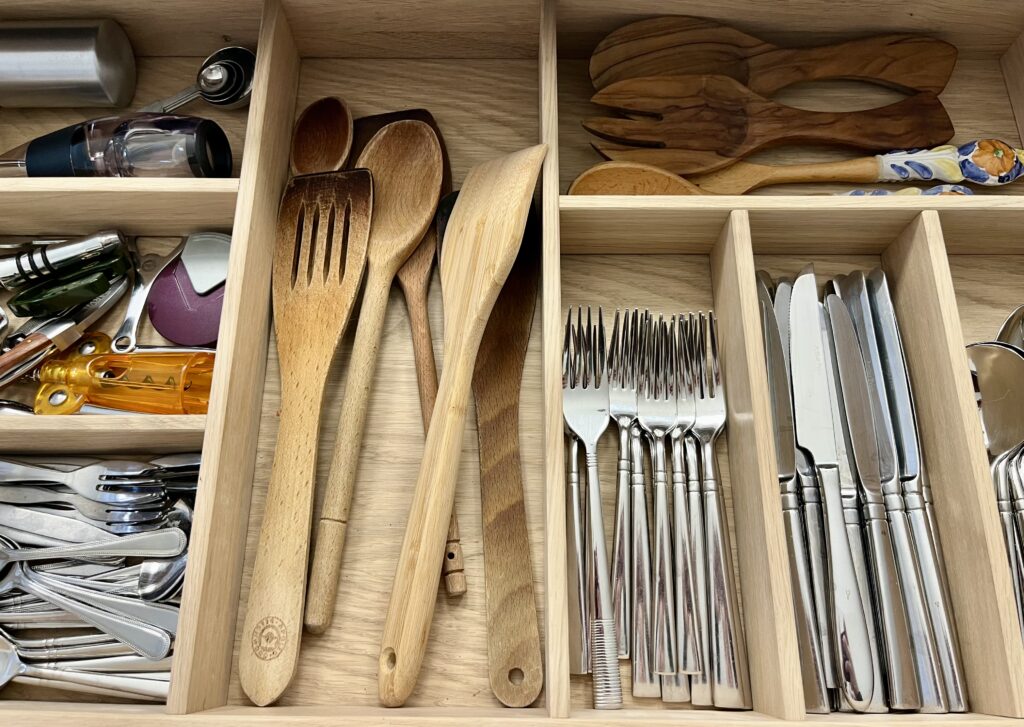
Empty the entire drawer onto the counter. Every fork, every lid, every random gadget. Wipe the inside so you’re starting clean.
Now group items by category: everyday cutlery, cooking utensils, baking tools, lids, plates or bowls, cleaning cloths and random extras.
Deep kitchen drawers especially become chaotic because they hold too many categories at once. If something hasn’t been used in months, relocate it. The less you’re managing, the easier this becomes.
Visualise
This is also where you decide what the drawer is actually for. A drawer that tries to store everything will never look organised.
Think about how you cook. Do you bake often? Do you meal prep?
Measure Your Drawer
Before buying any drawer organisers, measure properly.
You need: Width (side to side), depth (front to back) and height (especially important for deep drawers)
If you need more information please see the bog linked below on how to measure properly.
I also recommend using a proper tape measure not a ruler or guessing.
Organise
Shallow Drawers
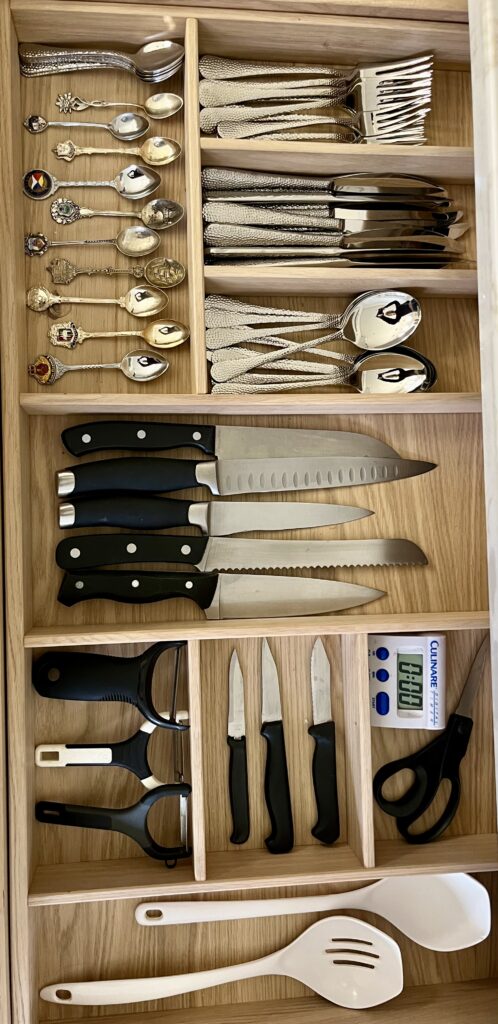
If your drawer is mainly forks, knives, spoons and cooking utensils, you need structure.
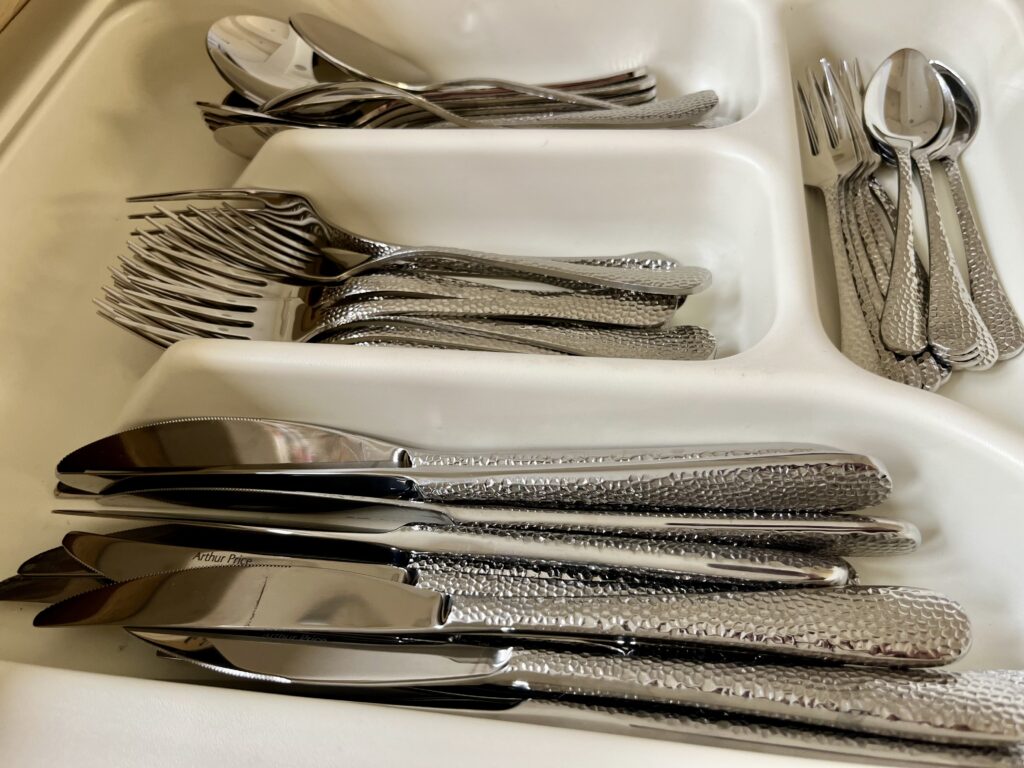
Expandable Plastic Cutlery Trays. These are the safest choice for most kitchens.
Pros – Adjustable width, easy to wipe clean, affordable and quick to install Cons – Lower-quality versions can crack.
Expandable trays work well because most drawers aren’t perfectly standard. When the tray stretches to fill the space, it doesn’t slide around every time you open it. If you want practical and low-risk, this is usually the best starting point.
Bamboo Cutlery Trays If you want something sturdier or slightly more premium-looking, bamboo is a good upgrade.
Pros – Stronger structure, long-lasting, looks more cohesive and doesn’t flex under heavy utensils
Cons – More expensive and requires accurate measuring
Bamboo trays are ideal if you prefer a more uniform look inside drawers.
Plastic Trays – Fixed-size plastic trays only work if your drawer dimensions match exactly. I have found ones that fit very well in my drawers but they take a lot of searching for.
Cutlery Drawer 6 Compartment
This one is the good if you want something cheap and easy you just slide in and organise. It has different compartment options as well as different colour options. However it may not fit in all drawers.
Extendable Cutlery Organiser
This one is the same as the other one but expandable and comes in lots of different sizes. I think this one is the best as it is super cheap and you can adapt it to fit in your drawer. It also has more compartments.
Expandable Bamboo Organiser
This one has a more premium feel to it and looks more high end however it is more expensive at around £15. It comes in either black or natural with different sized compartments. It also doesn’t scratch like a plastic one will.
4 Pack Bamboo Divider
These are best if you still want to see the drawer under as you just pull them out and they become built in organisation. However they are a lot more expensive at around £40. You can get them in 2 different sizes and various colours.
Deep Drawer organisers
Instead of stacking lids on top of each other, these hold them upright.
Pros – Prevents them falling over, saves space, make handles visible. Cons – must fit your drawer height and cheaper versions can wobble
If your deep drawer is mainly lids and trays, this is often the biggest improvement you can make.
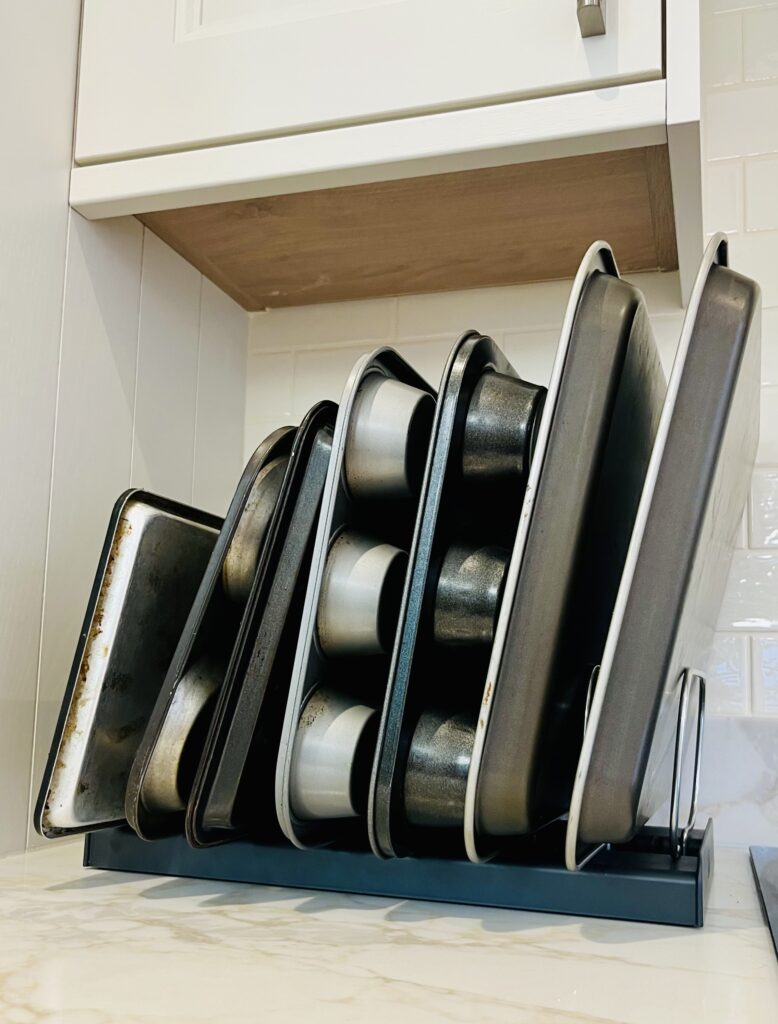
Deep drawers are where most chaos happens so the key here is vertical storage and division
Bamboo drawer dividers – These press against the sides of the drawer and let you create custom sections.
Pros – Adjustable, sturdy, ideal for standing trays and lids upright, prevent sliding and leaning stacks. Cons – must measure accurately and slightly higher cost
Standing items vertically instantly makes a deep drawer feel calmer and more intentional.
Expandable Pan Lid Organiser
Tis comes with 10 adjustable dividers and is used for storing pots pans and lids. It is extendable to fit in your drawer perfectly and you can remove the dividers for larger items.
Joseph Joseph Cookware Organiser
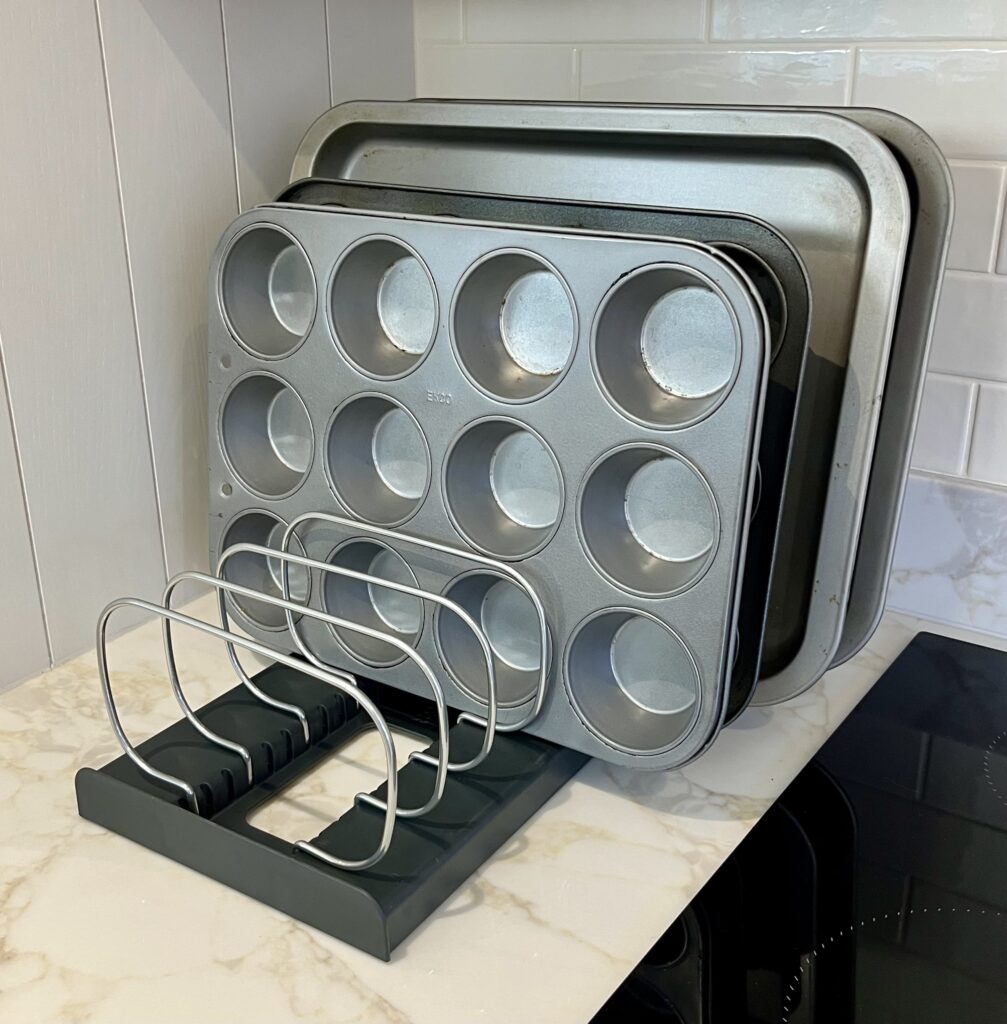
This is my favourite for storing baking trays as I have one. This one makes it so easy to see what I have. It has 8 wire dividers ad can store anything from cake tins to baking trays. Price around £20.
Bamboo Plate Rack Holder
This one is the cheapest at under £10 and has either 4 or 8 slots. It is best for storing plates and it looks very high quality. However it’s not expandable so not as good for larger items.
Instead of filling the drawer randomly, assign zones based on frequency of use.
Front section: Everyday items
Middle section: Weekly-use items
Back section: Rare or seasonal items
In a deep kitchen drawer, this is essential.
For example:
- Plates stacked in the centre
- Lids upright on one side
- Baking trays vertically at the back
- Utensils in a front insert
Heavy items should stay toward the front for safety and easier lifting.
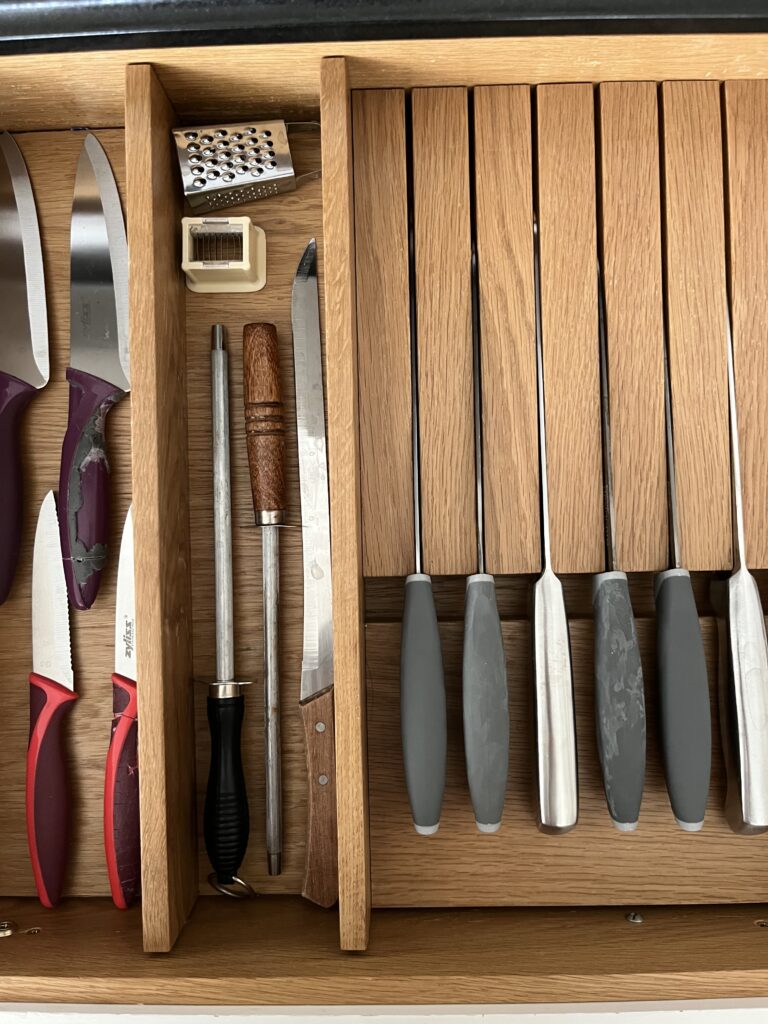
The goal is visibility. When you can see everything clearly, you put it back properly.
My top tips:
Even good organisers fail if they shift around.
Small upgrades help:
Non-slip drawer liner, my favourite one is linked below
Leaving around 10% empty space
Matching organiser materials
Avoiding over stacking
Deep drawers wobble more because they carry more weight. A liner stops trays sliding and reduces noise.
Also, don’t fill every centimetre. If a drawer is packed tightly, the first new item you add will break the system.
Reset
Do a weekly five-minute reset.
Put items back.
Throw away packaging.
Re-align trays.
This stops chaos before it starts and keeps your system running whilst setting you up for the new week.
You-Proof
Your kitchen should be easy when you’re tired.
Heavy items near the front. Everyday tools easy to reach. Nothing stacked so high it collapses.
If you can unload the dishwasher and put everything away without thinking, you’ve built a strong system.
Organising kitchen drawers isn’t about making them look Instagram-perfect.
It’s about smooth opening and closing and no digging, falling stacks or daily irritation
When the structure is correct, the drawer maintains itself and once one drawer works, the rest start to bother you…in a good way.