How to Organise a Desk for Productivity
This post contains affiliate links. If you purchase through these links, I may earn a small commission at no extra cost to you.
If even looking at your desk makes you hesitate before you sit down, it’s costing you far more than you realise. Whether you’re revising for exams, working from home, freelancing, or setting up a study space for your child, your desk should remove effort, not create it. The goal isn’t a Pinterest-perfect setup. It’s a system that makes it easier to start, stay focused, and finish.
This guide is designed around real habits and daily use, not aesthetic trends that collapse after a week.
The IVORY Method is the simple system I use to organise every space in my home so it actually stays organised. Instead of just making things look tidy, it focuses on creating systems that work in real life.
It stands for:
Inventory – see exactly what you own
Visualise – design the space before organising
Organise – create clear zones and structure
Reset – build simple habits so it never gets chaotic again
You-proof – make it realistic and easy to maintain
Every guide on this blog follows this method, so you can use it in any room and get amazing results.
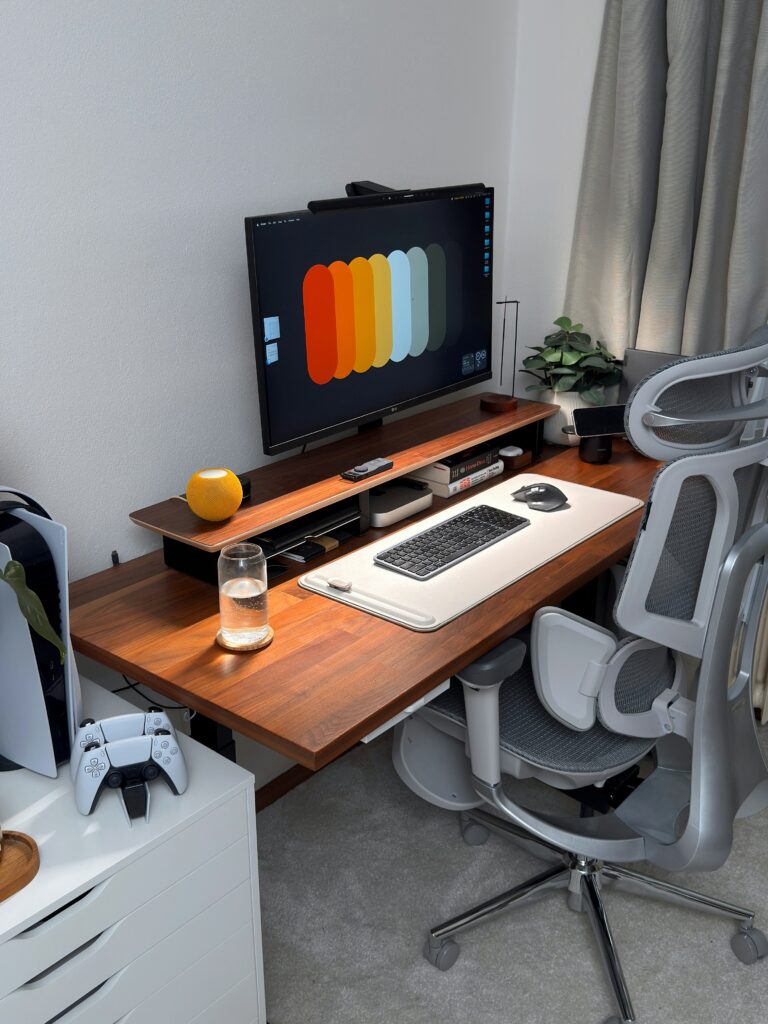
Why Desk Organisation Matters
The clutter on your desk not only looks awful but it’s increasing your cognitive load, even when you think you can just work through and ignore the mess.
When your desk supports you properly you begin tasks faster, stop losing tools and notes, procrastination reduce and work sessions feel smoother
This is critical for everyone so I’m hoping that this page can give you a structured desk and give you back time and energy.
Inventory
Before buying organisers or moving things around, you need a clear picture of what’s living on your desk. When I did this properly, I realised I didn’t need more storage; I just had too much random stuff.
Empty the surface, drawers, bags, cable areas and anything else you have around your desk. Then group the items by what they are (e.g. stationery). You’ll probably find duplicates, old notes, and things that migrated there for no reason. Get rid of anything you don’t need, be ruthless. The less you keep, the easier the system is to maintain.
You probably have around three categories: Paper, stationery and other.

Visualise
When you start organising you need a clear idea of what you want the finished product to be. Think about what you do there every day, what items you always need etc. Or if your main concern is it looking nice because you think that will help you be more productive then decide what colour each drawer will be. You have to do it based off what you want for the space because nobody else knows what’s going to motivate you enough to get sat at your desk each day.
Then you need to plan what areas need to have nothing in them. For example, if you take calls, your desk needs to look clean on camera and lighting matters or if you get overstimulated by stuff on your desk, get an extra cabinet of drawers. When you plan your layout first, you stop rearranging every week.
Organise
Now that you have decided what stays, assessed your workflow and visualised your zones, this is where the real transformation happens. Most people try to organise everything at once and end up overwhelmed. But a few, high-impact changes will make your desk feel completely different. Let’s start with the one that gives the biggest return.
If your drawers are currently a “throw everything in and hope for the best” situation, this is the first thing to fix. When your items have clear homes, you stop wasting time searching, and putting things away becomes automatic.
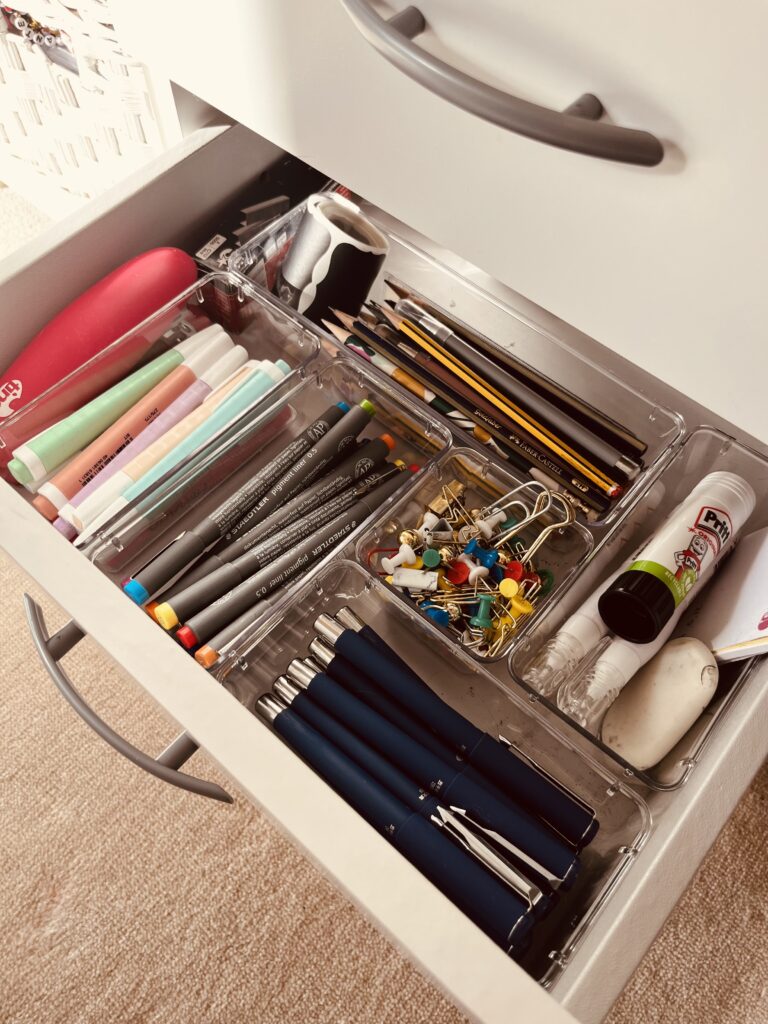
Drawer Organisers
The biggest mistake people make is assuming they need more drawers. But in reality, they usually just need structure inside the drawers they already have.
There are a few main types of dividers, and each works differently depending on your setup, I have included four different ones below and you’ll notice they’re the same as the ones I put up for the vanity post because these drawer organisers can be used for both.
Vtopmart Drawer Organiser Set
These come in Pink, White, Black and clear in a pack of 25 for around £15. The clear pack also come in packs of 10, 15, 28, 37 and 44. They are very good value for money and work extremely well. They are customisable for any drawer as in one pack you get 4 sizes.
The only downside is the smallest container doesn’t have places to put non slip silicone pads.
SpaceAid Bamboo Drawer Organisers
These come in Black, White, Grey, Navy and Natural in packs of either 7, 14 or 21. These are more expensive though but they look gorgeous so it depends on how much you care how they look. They are customisable for any drawer as in one pack you get 4 sizes.
I think these would look really nice but they are a lot more expensive and the plastic ones do the sme thing.
20 Adjustable Drawer Dividers
These only come in one colour in a pack of 20 for around £7. These are best if you want a budget friendly option and very customisable. I personally don’t think they look as nice but you can change how they look when your makeup collection changes.
Clear Drawer Organiser Set
I personally think these are the best ones. They come in a pack of 12, 16 or 25. They are a similar price to the Vtopmart ones but I think they are better as the smallest ones have space for non slip silicone pads and are the best reviewed especially by me as these are the ones I have all around my house!
Vertical and Horizontal File Storage
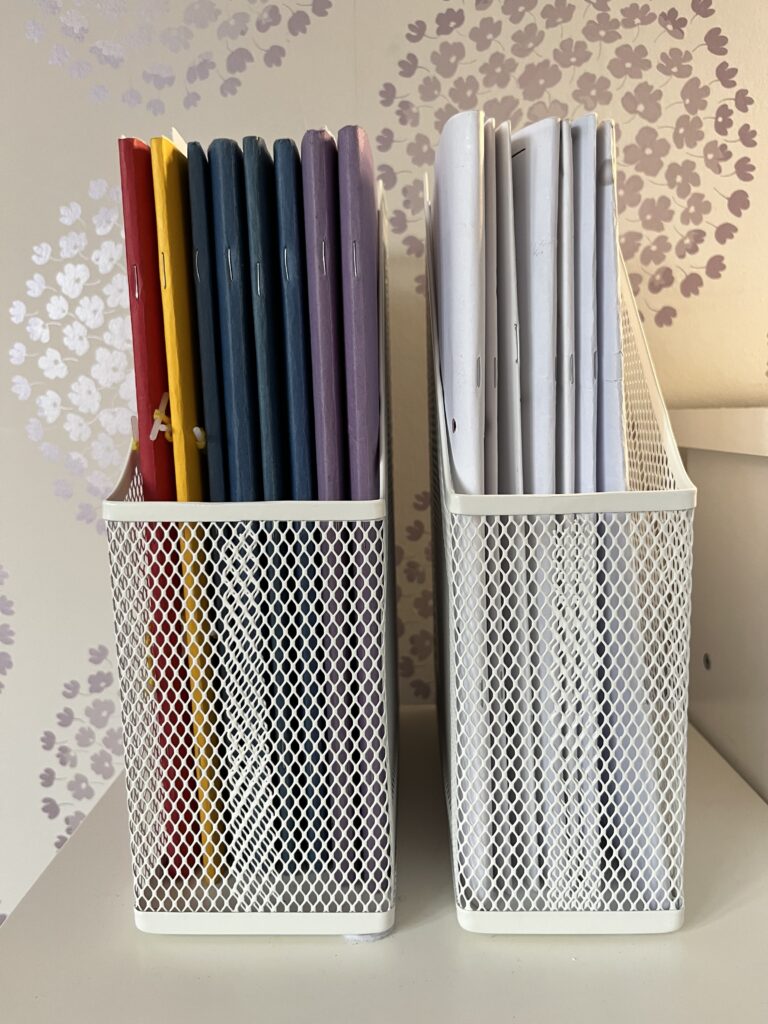
The second most powerful change is switching from stacking paper on a desk to storing vertically or providing drawers.
Open file holders work best if you need quick access and want to grab materials throughout the day as they keep work visible and accessible. They can look messier if you overfill them.
Closed or semi-closed holders create a cleaner look but slightly reduce visibility.
Drawer paper Holders: best for storing paper that can be grouped and you don’t need to view such as blank paper as it’s easier to see what’s what.
Cable Management
For me, cable clutter drains my focus because my brain registers the visual chaos and I want to fix it, sometimes I don’t even realise it. A simple cable system can make your desk feel calmer in minutes. Phones, headphones, watches and random chargers are one of the main reasons desks become cluttered again after organising. Creating a dedicated charging zone stops this from spreading.
Under-desk cable trays are the most effective long-term solution. They hide power strips and create a single controlled zone. The main downside is installation, but once done, they require almost no maintenance.
Cable clips are easy and affordable. They guide wires along desk edges and stop them falling behind furniture. However, they don’t reduce bulk, only visibility.
Small trays or catch-alls for everyday tech. These are simple and effective, but they can become messy if they’re too large.
Charging stations or hubs that hold multiple devices. These reduce visual clutter and make everything feel intentional. The downside is that some are bulky.
Drawer charging setups (with cable holes) create the cleanest look, but they require more planning as they are built into the desk.
If you only implement one cable system, choose the tray. It has the biggest impact. Choose something you’ll actually use daily.
Phone Charging Station
This is the best choice if you want to charge multiple devices at the same time as well as earbuds and watches. It also comes in multiple sizes and it looks super neat. However it is more expensive at around £30 pounds and is quite bulky.
Cable Tidy Clips Straps
These are the cheapest option as you get 50 for around £10. You can multiple colours and they’re super easy to use as you just stick them where you want the cables to go. However if you have wallpaper don’t use them as it may peel off.
Under Desk Cable Management
This is the best choice if you don’t have any space for charging currently. It clamps on easily and holds wires out of sight. However, it can take up space under your desk, which might feel bulky if you have limited leg room.
Reset
Now we need to put in place habits so that the system doesn’t break down. Once a week do a tidy of your desk just to make sure everything is in the right place for the week ahead. Find habits that work for you, if you are quite good at remining ourself then you may do a quick clean up every day, whereas some people prefer to do a bigger sort out once a week.
You-Proof
This is where you come back and ask yourself what is and isn’t working. If your system only works when your motivated it won’t stay tidy so that’s why I find this is the most important step. Make sure you design your desk around your habits, not an ideal version of your routine.
For example, I keep a small ceramic tray on my desk for everyday essentials like lip balm, AirPods, and the rings I take off before typing. Spare chargers and cables stay in a labelled pouch inside a drawer. That way everything is easy to find, but nothing distracts me.
The easier the system, the more likely you are to stick with it.
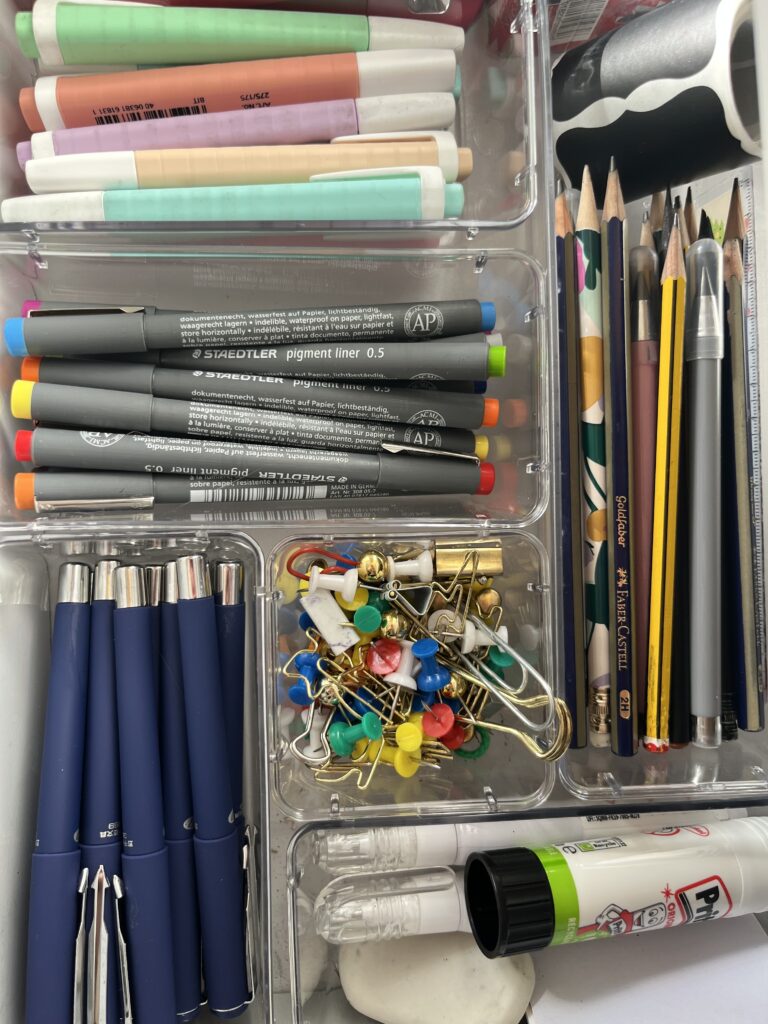
The Difference a Structured Desk Makes
After clearing, organising and making the system work for you, you’ll notice so many benefits. You start quicker, stay focused longer, lose fewer things and you feel calmer.
Over time, these systems build momentum. Once your desk supports your workflow, productivity becomes easier and exam season feels far more manageable.