How to measure your space before you buy storage
This post contains affiliate links. If you purchase through these links, I may earn a small commission at no extra cost to you.
If you only take one thing from this entire blog, let it be this: Measure first. Always.
It sounds so obvious. But I promise you most problems start with buying storage that doesn’t actually fit.
I learned this the hard way when I started reorganising my room a few years ago. I’d get excited, find something online, imagine how perfect it would look… and then realise it was either slightly too tall, too wide, or left awkward empty gaps. In small bedrooms especially, a few centimetres makes a huge difference.
The System I Use (Simple but Effective)
Before I buy anything, I check three things: width, height and length. I always use a proper tape measure instead of a 30cm ruler. Rulers usually have gaps at the beginning and end, and you end up measuring the same space three times over. A tape measure is quicker, more accurate, and it makes such a difference. Here’s the link to my favourite one:
Why Measuring Is Important
Buying storage without measuring leads to drawers that won’t close, boxes that don’t slide under the bed, shelves that block radiators and organisers that waste space around the edges
In smaller rooms, you don’t have “spare space” to absorb mistakes. Every centimetre matters. And when something fits exactly, it looks intentional instead of temporary.
Width
This is how wide the space is from side to side.
I measure: The full inside space, from wall to wall, or drawer edge to drawer edge while making sure there aren’t things like bed legs or skirting boards getting in the way
Height
Height is the clearance from: Floor to underside of bed, bottom of drawer to top of drawer or shelf to shelf
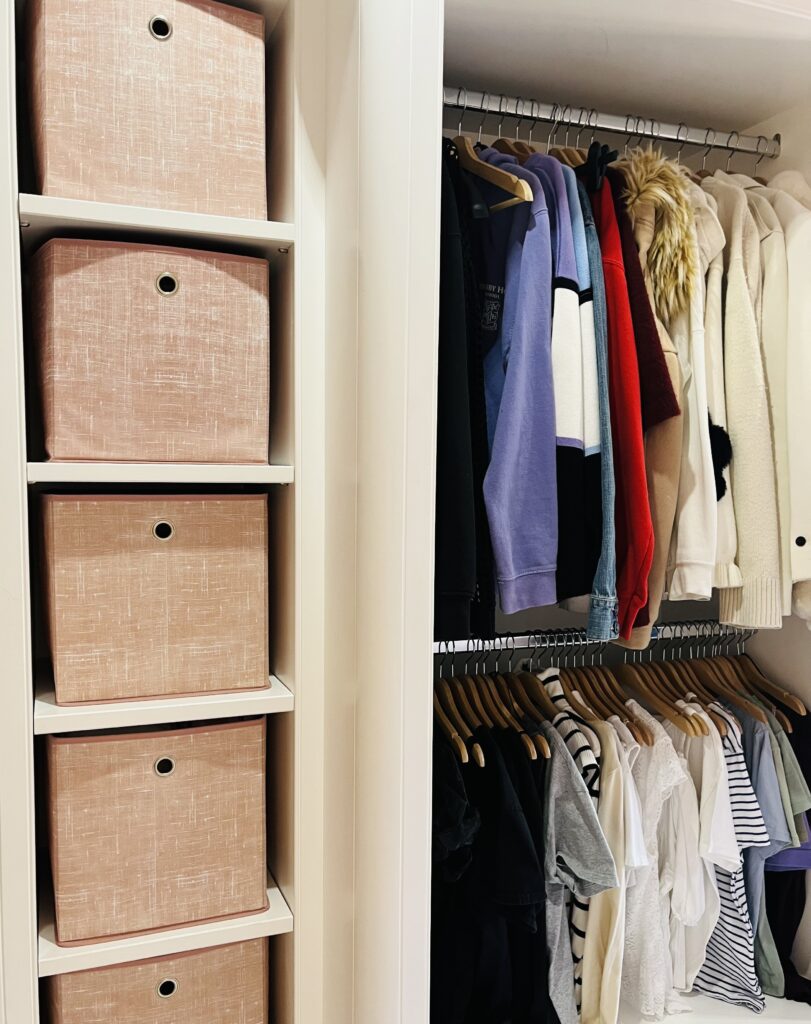
Storage boxes fit because you measured the clearance first. If they are too tall they won’t fit, not tall enough and they look silly and waste space. Always measure the actual height, not what you think it looks like.
Length
This is how deep the space goes from front to back.
It matters most for drawers, wardrobe shelves and under bed storage.
A lot of drawers look deeper than they actually are. If you don’t measure the full inside length, you can end up with awkward wasted space at the back.
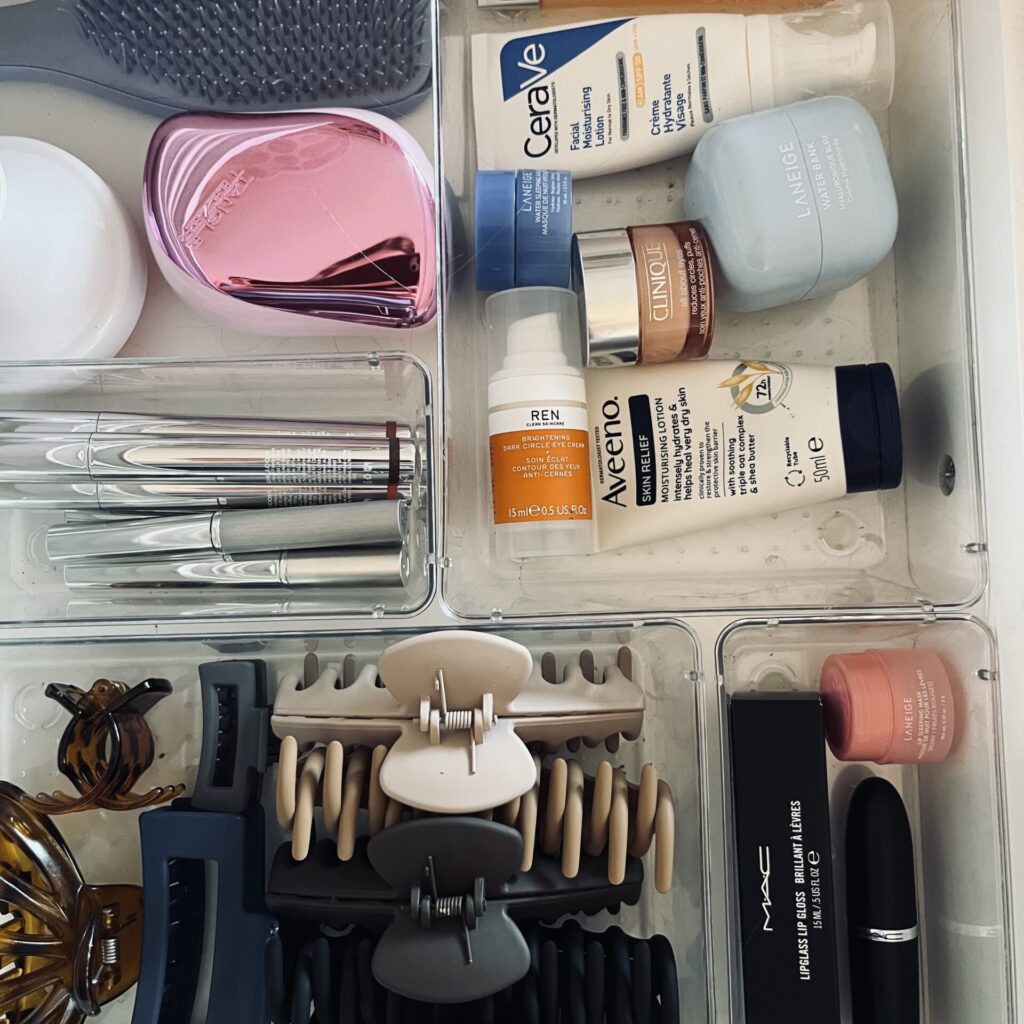
After I measure width, height and length, I subtract 1–2cm. This gives breathing room. Without that little gap things scrape, lids don’t open properly, drawers jam and boxes get stuck.
If something is large (like a unit or desk), outline the dimensions on the floor using masking tape, books or whatever you have. Then stand back. Can you walk around it comfortably? Will it block light? Does it crowd the room? This step alone prevents expensive mistakes.
Once you start measuring properly:
- You stop impulse buying
- You waste less money
- You choose smarter products
- Your space looks more intentional
It also builds confidence. When I shop now, I don’t guess. I know exactly what dimensions I’m looking for which saves SO MUCH TIME